
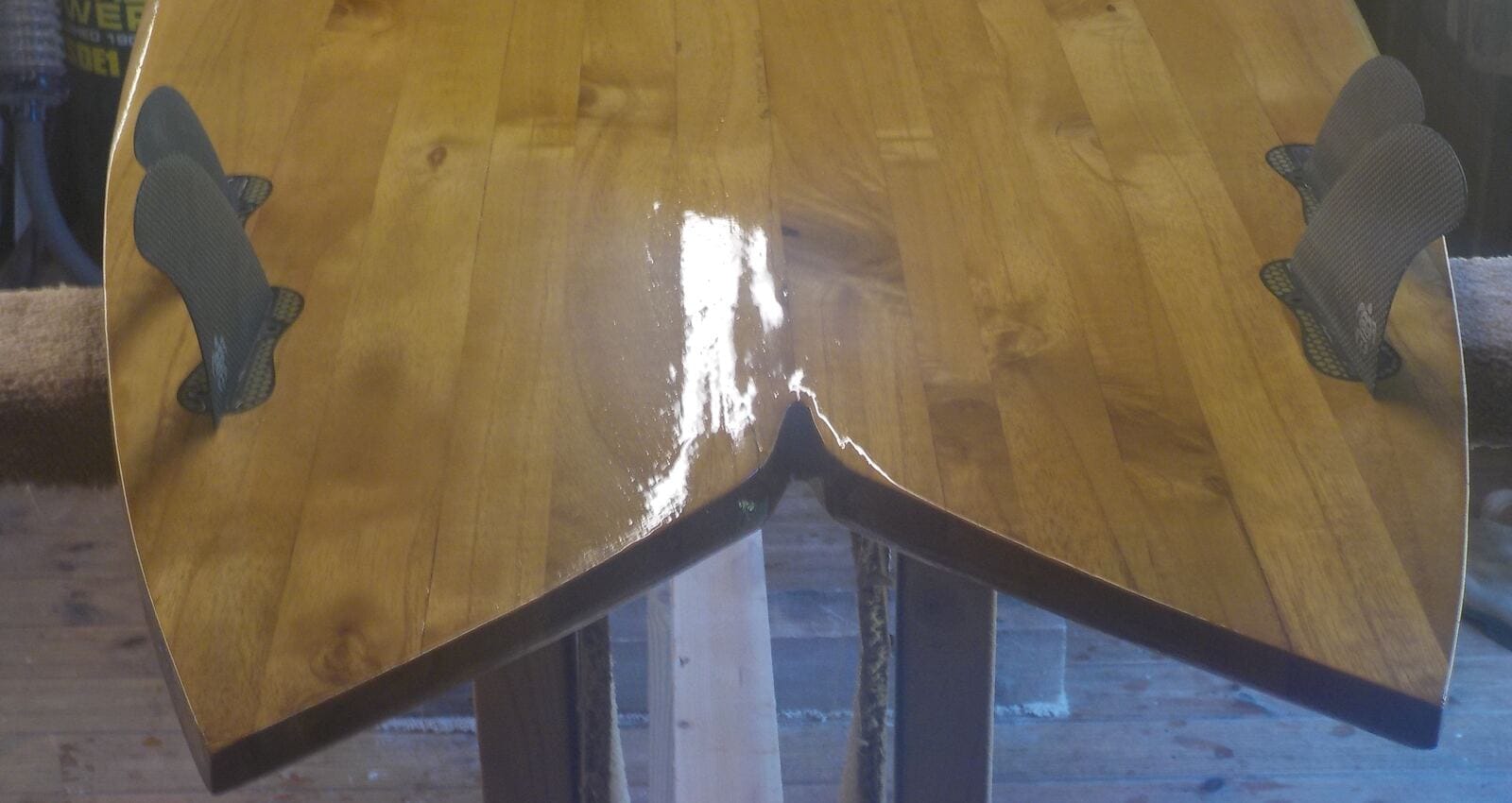
WOODKIT.PRO · Paulownia
Twenty years for a board
This wood did not start in a warehouse. It started in 2006, on a sandbar on the northeast coast of Brazil, with a tree almost nobody in Europe was paying attention to.
2006 · Barra dos Remédios, Camocim
More than eighty hectares of land in Camocim, in the Brazilian state of Ceará, with a large saltwater lake at its heart. Building on it was impossible because of flood risk: everything had to be raised on stilts. And that required our own timber.
While looking for bamboo, something else appeared: an ancient tree known as the Phoenix tree, because of its ability to regenerate after every cut. It was paulownia. Extremely fast growth, remarkably low density, and an uncommon versatility as timber.
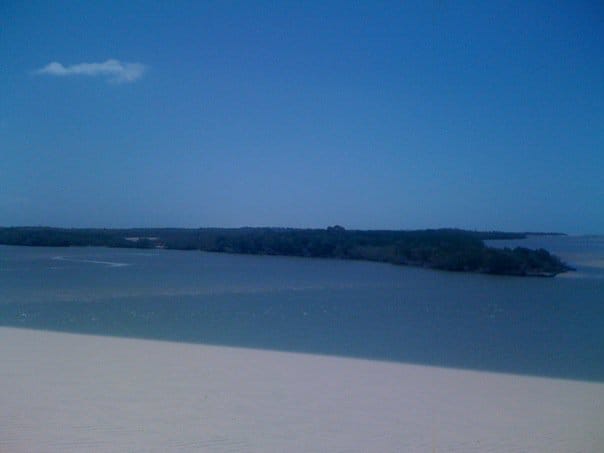
The land and the saltwater lake. Barra dos Remédios, Camocim, Ceará.
2012 · The first plantation
There was no cultivated paulownia in Europe. The little that was used was imported from China, and those who used it did not explain much about why: the advantage over many conventional woods was too good to make noise about.
The decision was not to import it, but to grow it here. Between 2010 and 2011 came the feasibility studies, laboratory visits and the search for the right plant material: a woody plant propagation nursery had just developed a paulownia clone for Mediterranean climate. With it, in 2012, the first agroforestry plantation was established: thirty hectares.
Regenerating abandoned fields, growing timber like a crop and reducing pressure on forests. That was the idea. The theory fit in one sentence. Reality took eight years.
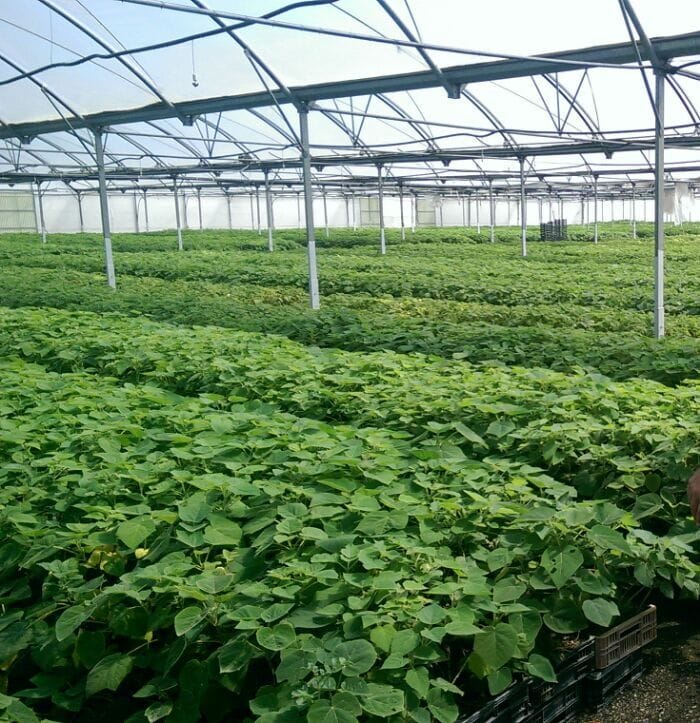
The Mediterranean clone, propagated in a nursery before heading to the field.
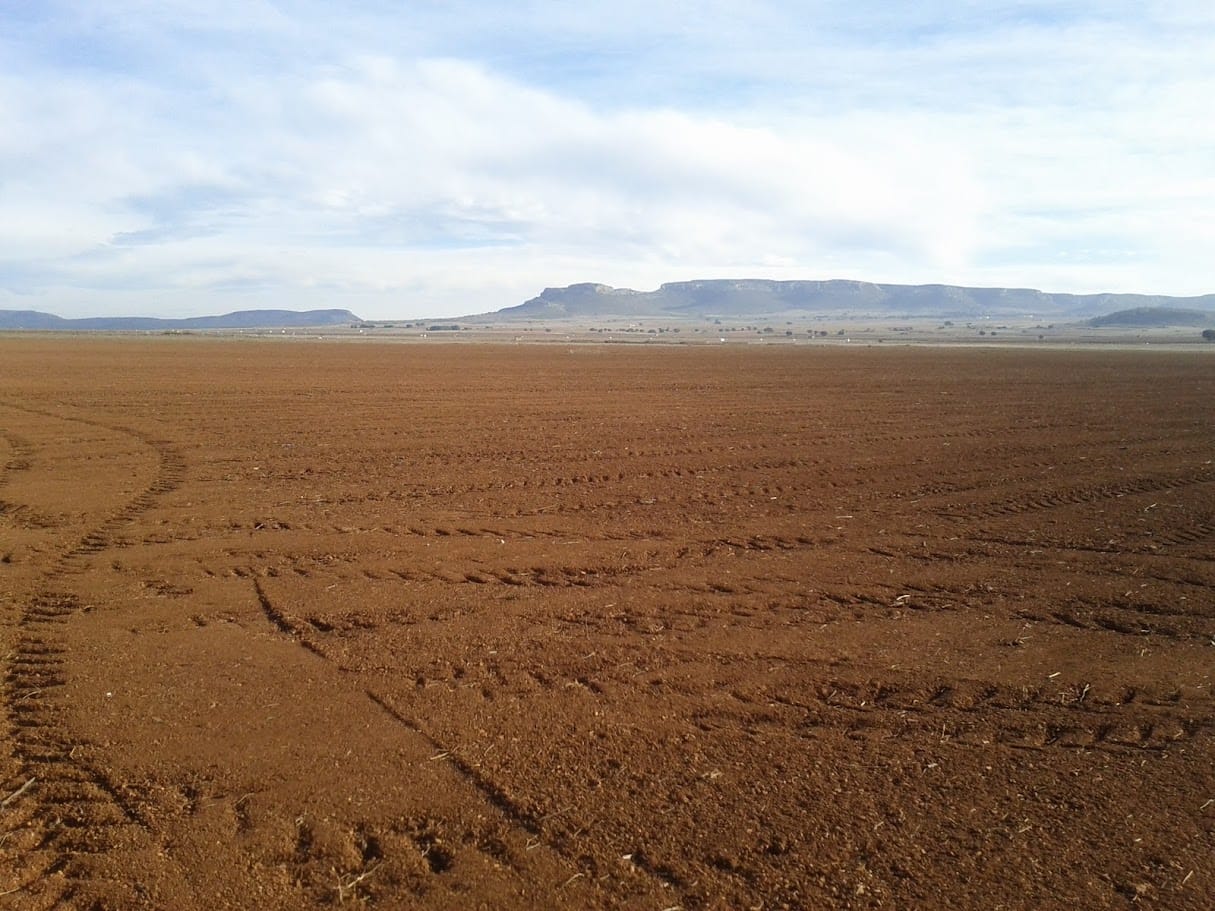
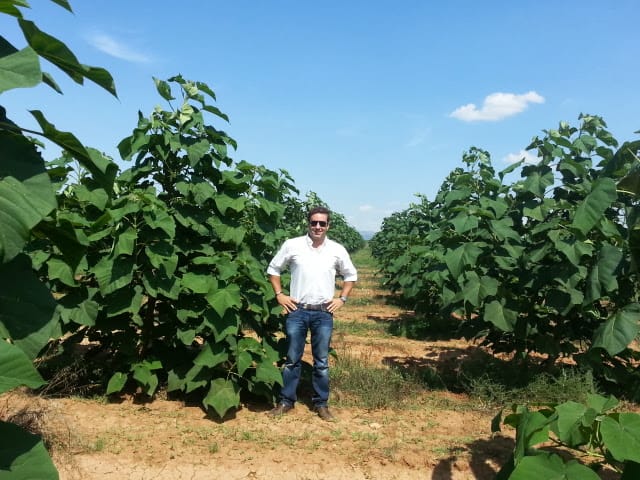
The same field. Before, and with the paulownias already planted in rows.
The wait
Eight years is the minimum between planting and cutting a tree to sell a single cubic meter of timber. Eight years without a product, without a catalog and without a customer. Just planting, tending and waiting.
What makes that wait worthwhile is what gives the tree its name: you cut it down and it grows back from the same rootstock. No need to replant. The same stump produces timber again in eight to ten years.
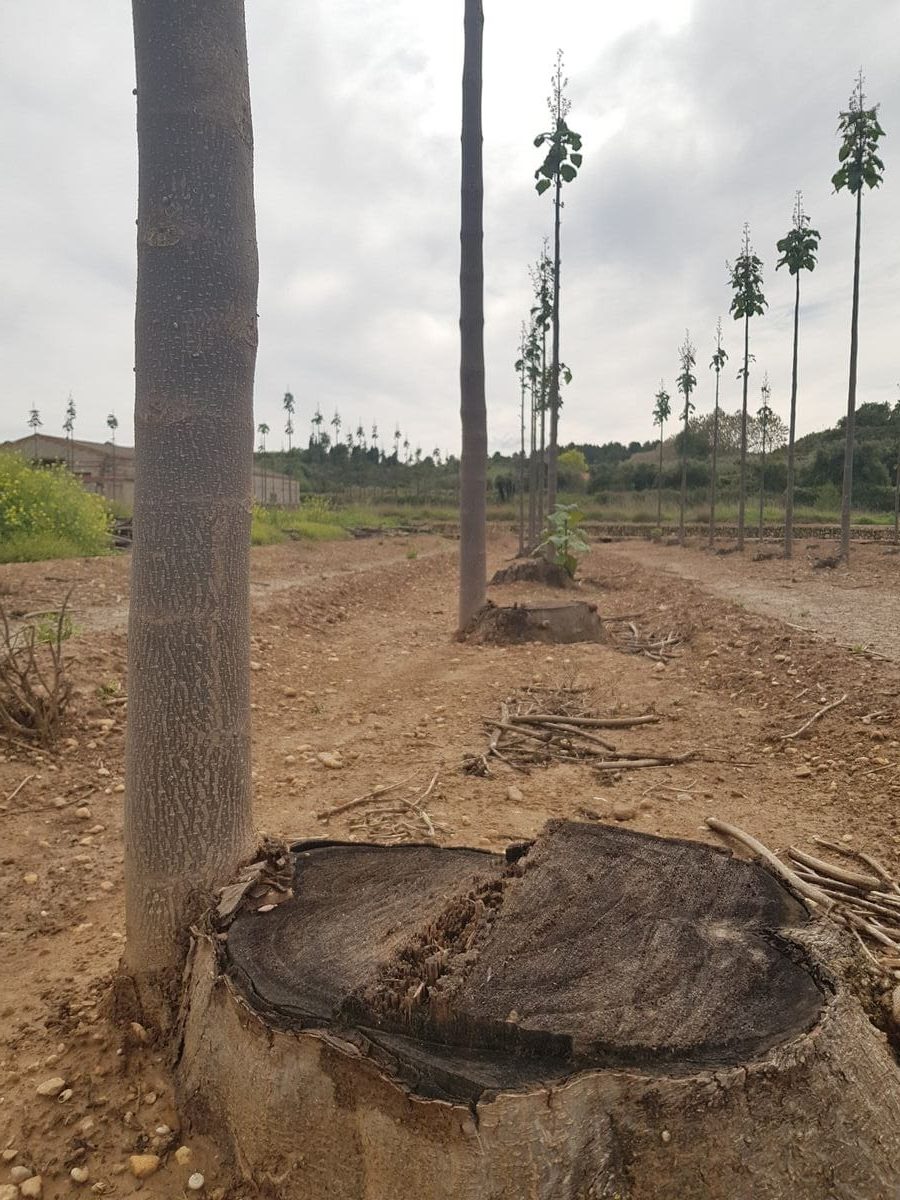
The cut stump and the new trunk, from the same rootstock. This is why it was called the Phoenix tree.
March 2016 · The first timber
The first step was not selling. It was characterization: understanding exactly what timber had been grown and whether it was useful for anything beyond standing in a field. It was.
In March 2016, the first harvest entered an industrial sawmill and the first real stock came out: the first cubic meters of paulownia cultivated in Europe. Twenty trees felled, no infrastructure of our own yet, and an established industrial market waiting in front of us.
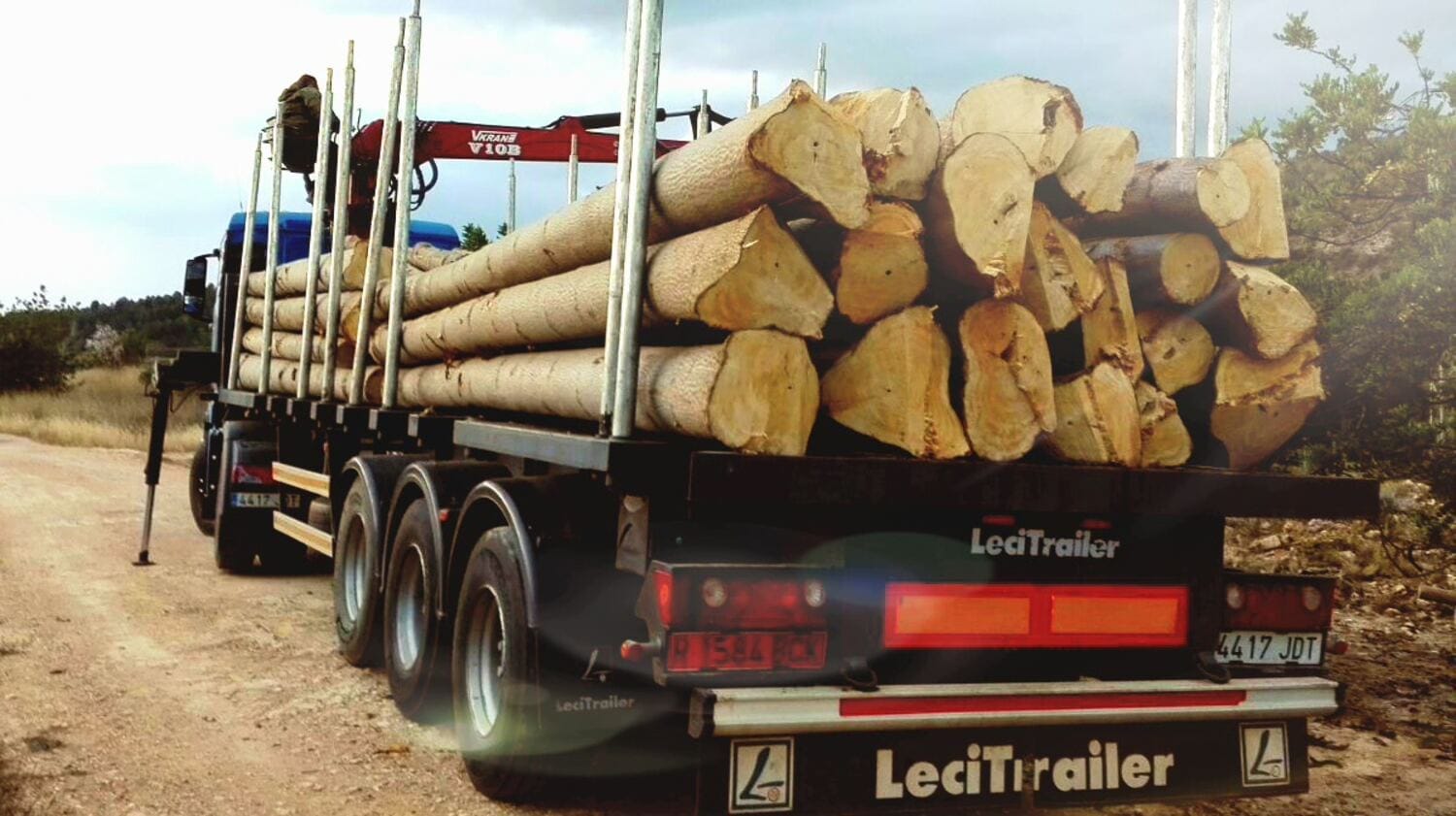
The first truck leaving the plantation on its way to an industrial sawmill.
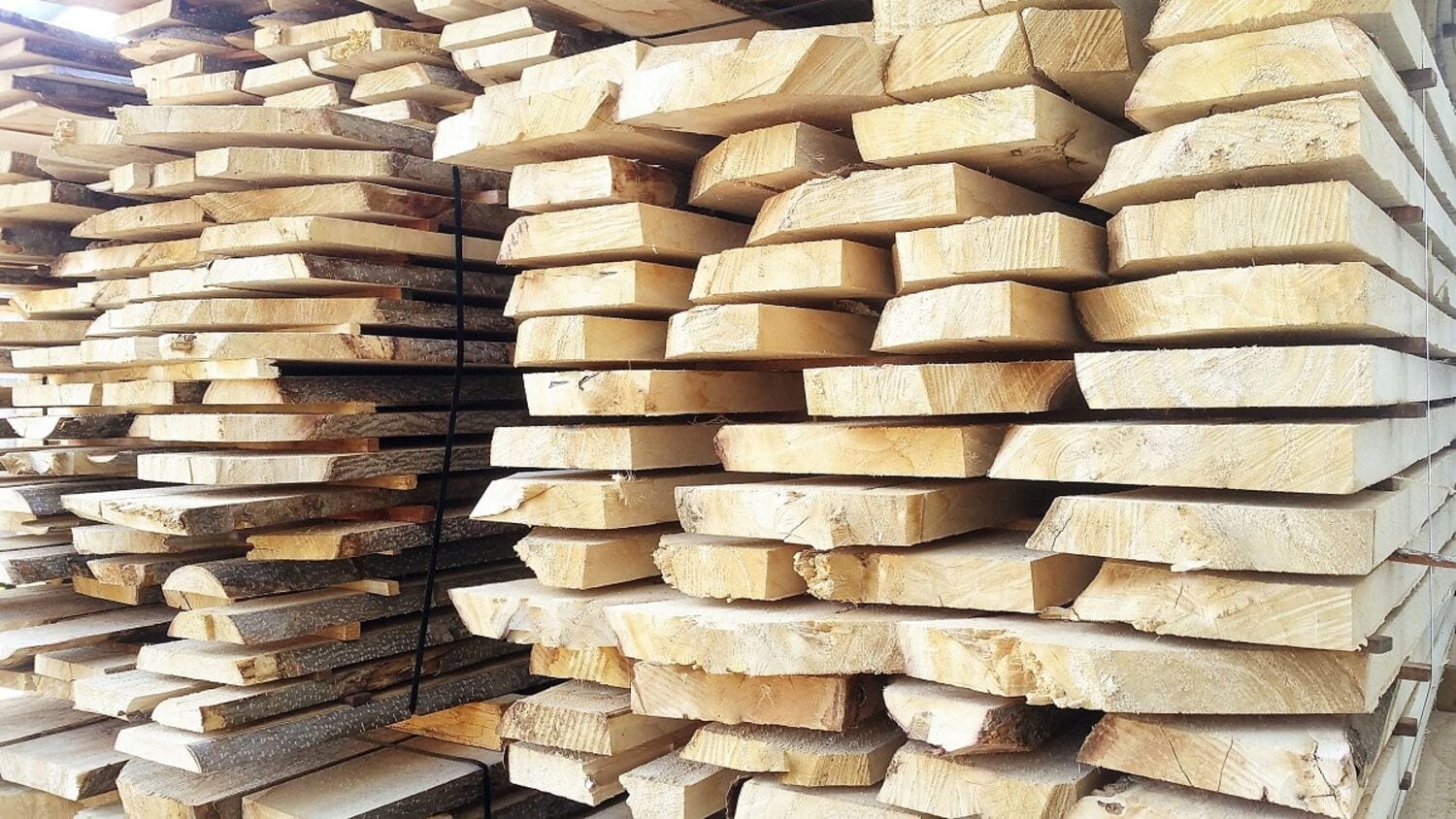
And the timber that came back from it: the first batch, rough-sawn and stacked for drying.
April 2016 · Six weeks later
It did not go into construction. It went into a surfboard.
Six weeks after the first stock existed, that timber was already heading to a surfboard workshop.
Requests were coming from around the world, but there was not enough production to serve them. The only people who could realistically be supplied from that first small batch were small shapers and craftspeople. One of them was a UK workshop building wooden surfboards by hand, one by one. These boards came out of that paulownia.
Delivery note 041 · 29 April 2016 · European paulownia shipped to a surfboard workshop.
“Lightweight, water resistant, strong, renewable and environmentally friendly: it is the ideal wood for surfboards.”
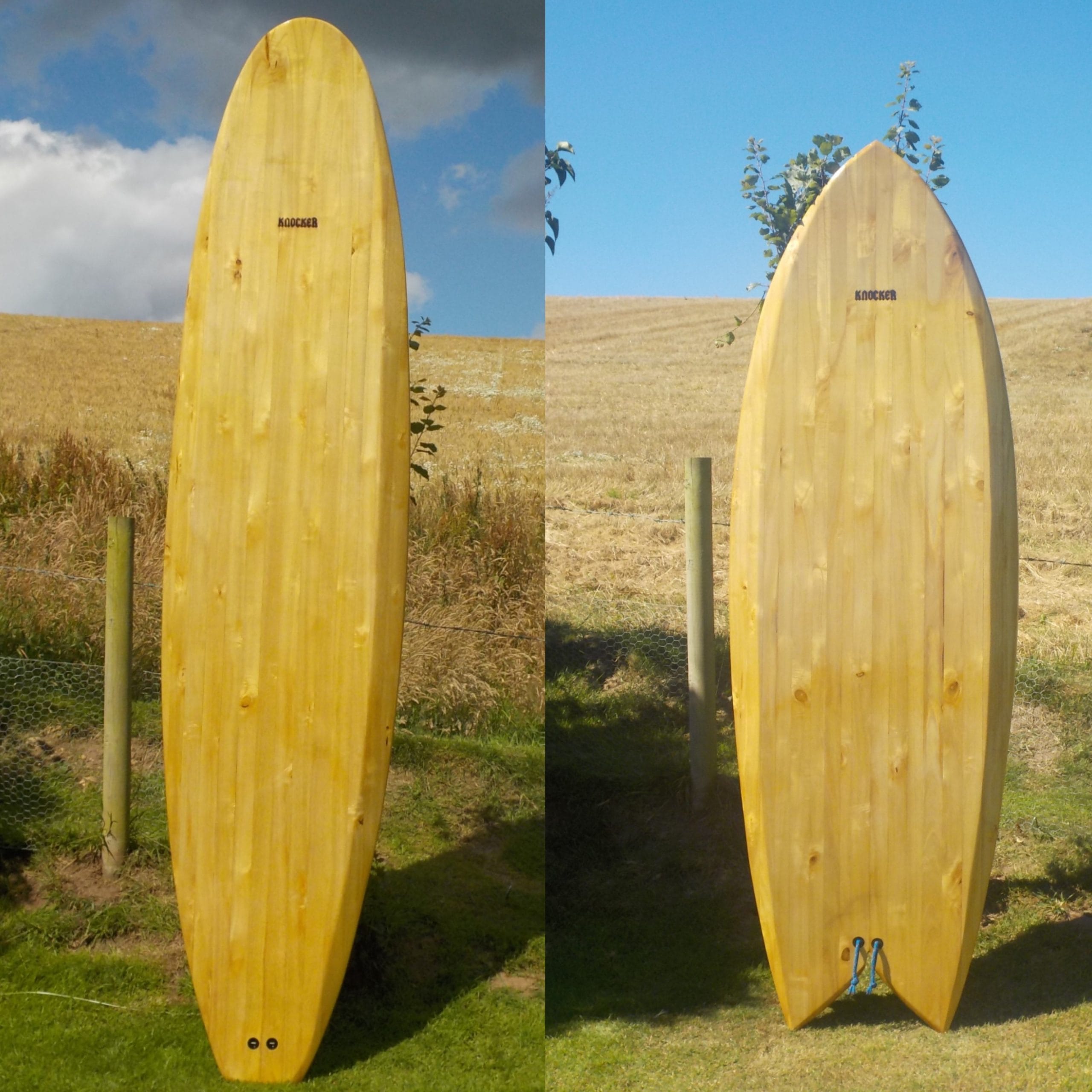
Two finished boards made with the timber from that first order.
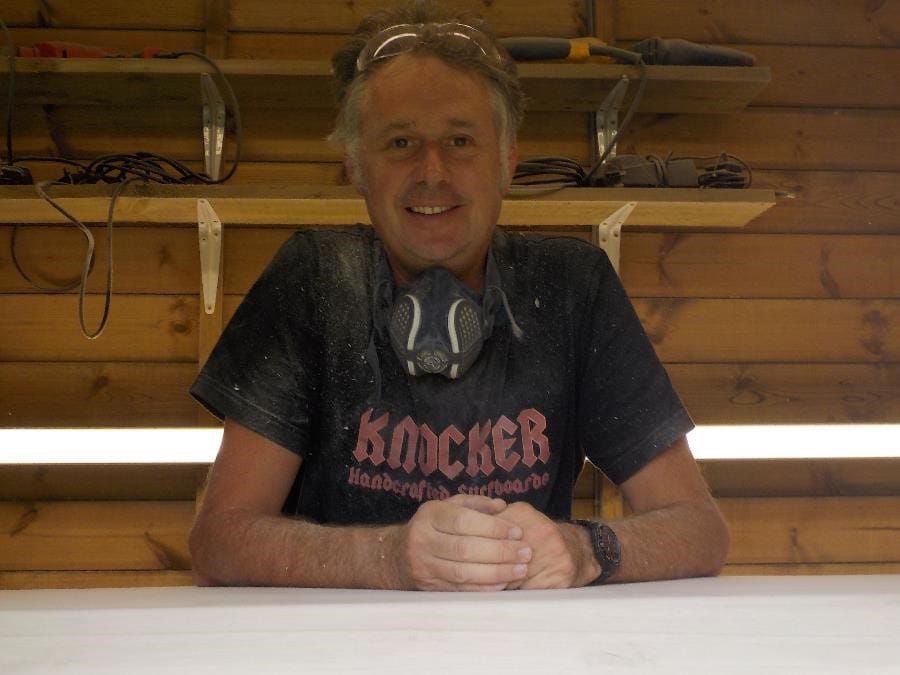
The workshop where they were built. By hand, one at a time.
Ten years later, with the timber problem finally solved, this is exactly what WOODKIT does. It is not a change of direction: it is a return to the first customer, now with the capacity to serve them properly.
260–290 kg/m³
Technical density
8–10 %
Target moisture
Laser
Cutting and engraving
Since then
Many more orders followed that first one. Over the years, this timber has reached hundreds of builders: people shaping in their garage or workshop, one board at a time, often on their own.
And they all run into the same problem before shaping even begins: finding the right wood and preparing it properly. Selecting, dimensioning, calibrating, drying. The part nobody sees, the part that is rarely anyone’s craft, and the part that decides whether the board can actually happen.
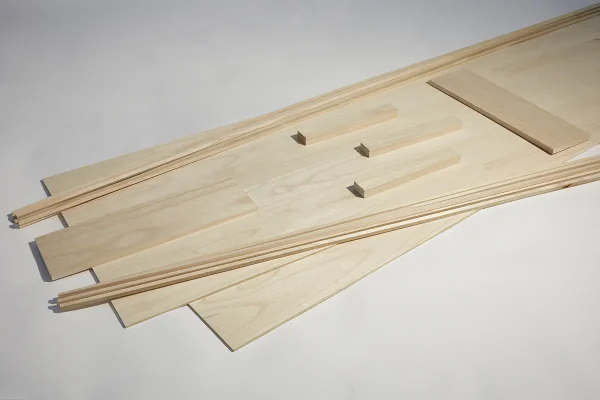
That is what WOODKIT solves. We still select the timber at the source, board by board. What reaches your workshop is not just a batch of wood: it is selected, dimensioned paulownia, prepared for building.
Twenty years to grow it.
A few weekends to turn it into a board.
// Three needs · three paths
What are you building?
WOODKIT
Single.
Deck, bottom and rail material. For builders working with their own design, without the need for a specific frame.
Buy surfboard kit without frame→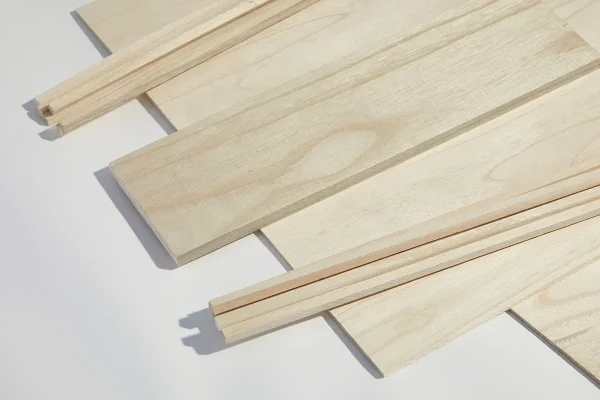
Your list.
Your project.
Only what you need. Build your own Paulownia wood pack around your project.
Buy Paulownia wood→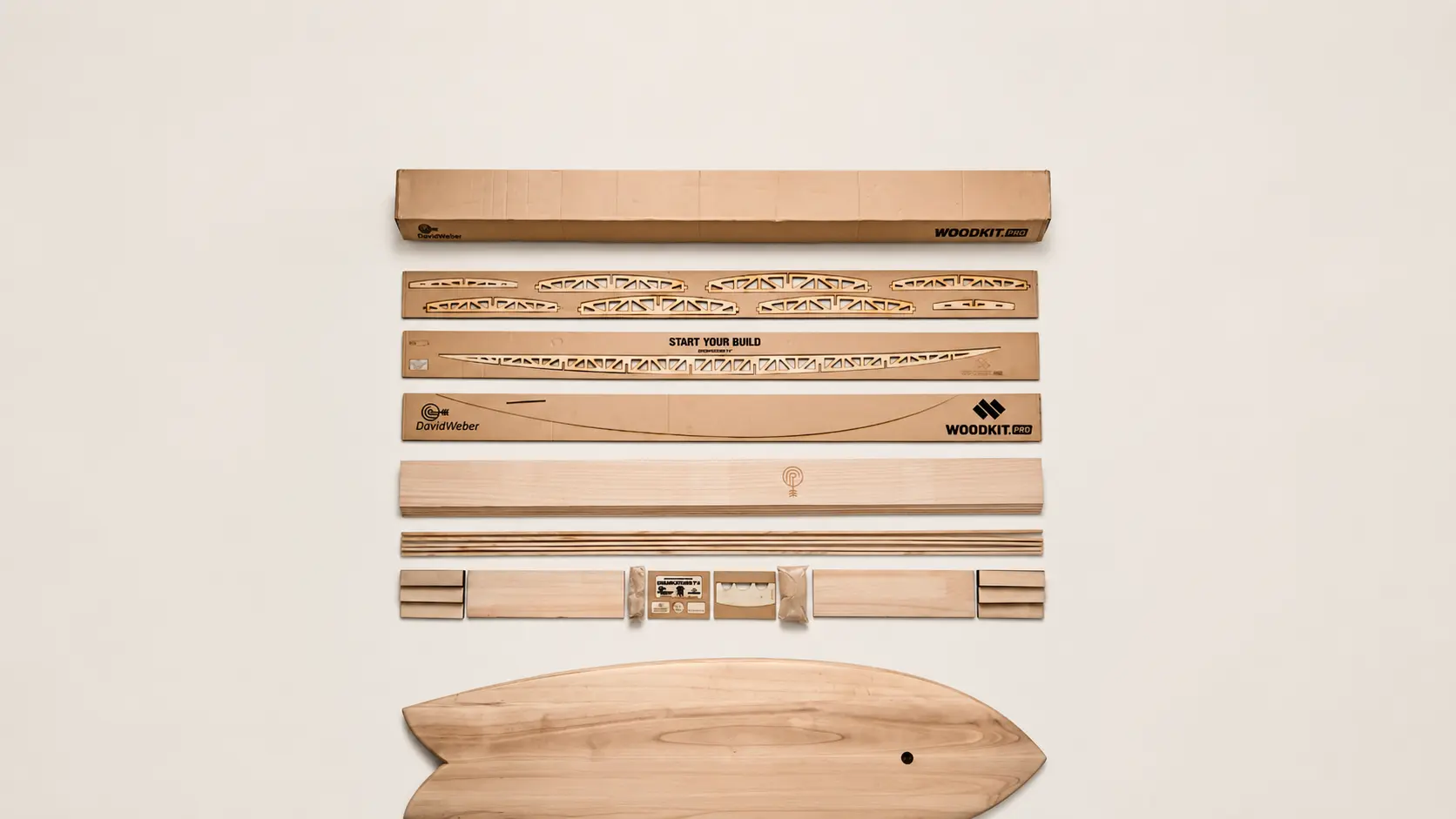
Professional
supply.
Running a business with professional or industrial requirements? Want to add WOODKIT.PRO to your range? If you're serious about Paulownia, let's talk.
Register as a professional→