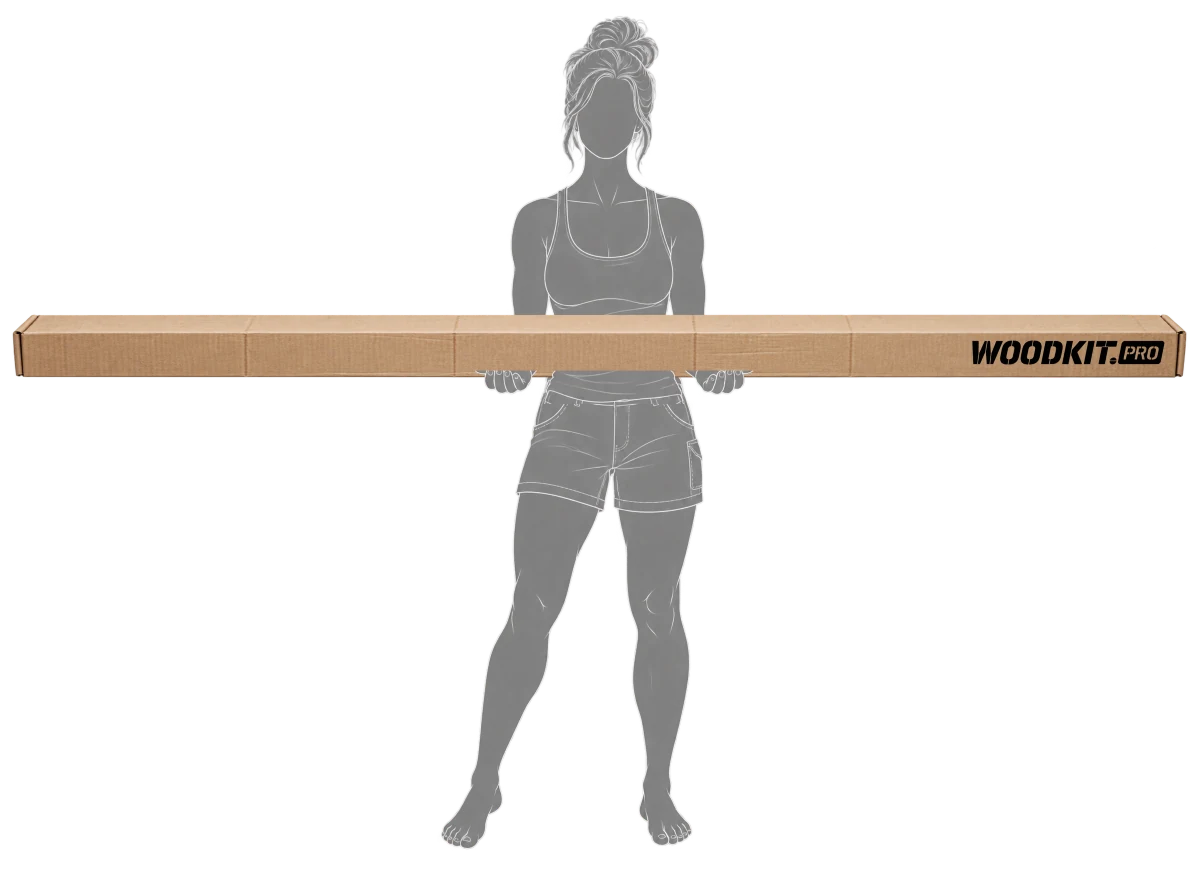
Learn · Guide · Wood for surfboards
Paulownia wood for surfboards: the builder’s guide
What makes Paulownia work in a wooden surfboard, where it falls short, and what to check before you buy it. Written from the plantation side, with lab data and real cut lists.
Short answer: Paulownia is one of the lightest woods you can build a surfboard with. Lab tests on European-grown Paulownia put it at about 256 kg/m³ at 12% moisture, it moves evenly when it dries, it glues well and it takes screws without splitting. It is soft and it is not durable unprotected, so it has to be fully sealed in resin and glass. That is why it is used for the skins, rails and frame of hollow wooden boards, not as a raw, oiled plank. The Paulownia in WOODKIT kits: 260–280 kg/m³.
Why Paulownia works in a surfboard
A wooden surfboard has one hard constraint: weight. Solid wood boards are heavy, so modern wooden boards are built hollow, with thin skins over an internal frame. The wood for that job has to be light, stable once dry, easy to bend and glue, and consistent from piece to piece. Paulownia checks those boxes better than almost any other timber you can actually buy in long, clear lengths.
- Light. Lab tests on Paulownia hybrid Cotevisa 2 grown in Spain measured an average density of 256 kg/m³ at 12% moisture, classed as “very light” under the Spanish standard UNE 56540 (CETEBAL, 2012).
- Calm when it dries. The same tests measured a total volumetric shrinkage of 9.1%, rated a “small” shrinkage. More important for a board: tangential and radial shrinkage are close to each other, so the wood tends to stay flat instead of cupping.
- Holds fixings without splitting. It was classed as “poco hendible”, with a low tendency to split, and screws went in without pre-drilling (CETEBAL, 2012). That matters when you fit fin boxes, leash plugs and vent plugs.
- Easy to work. It planes, routs, drills and sands without difficulty with sharp tools.
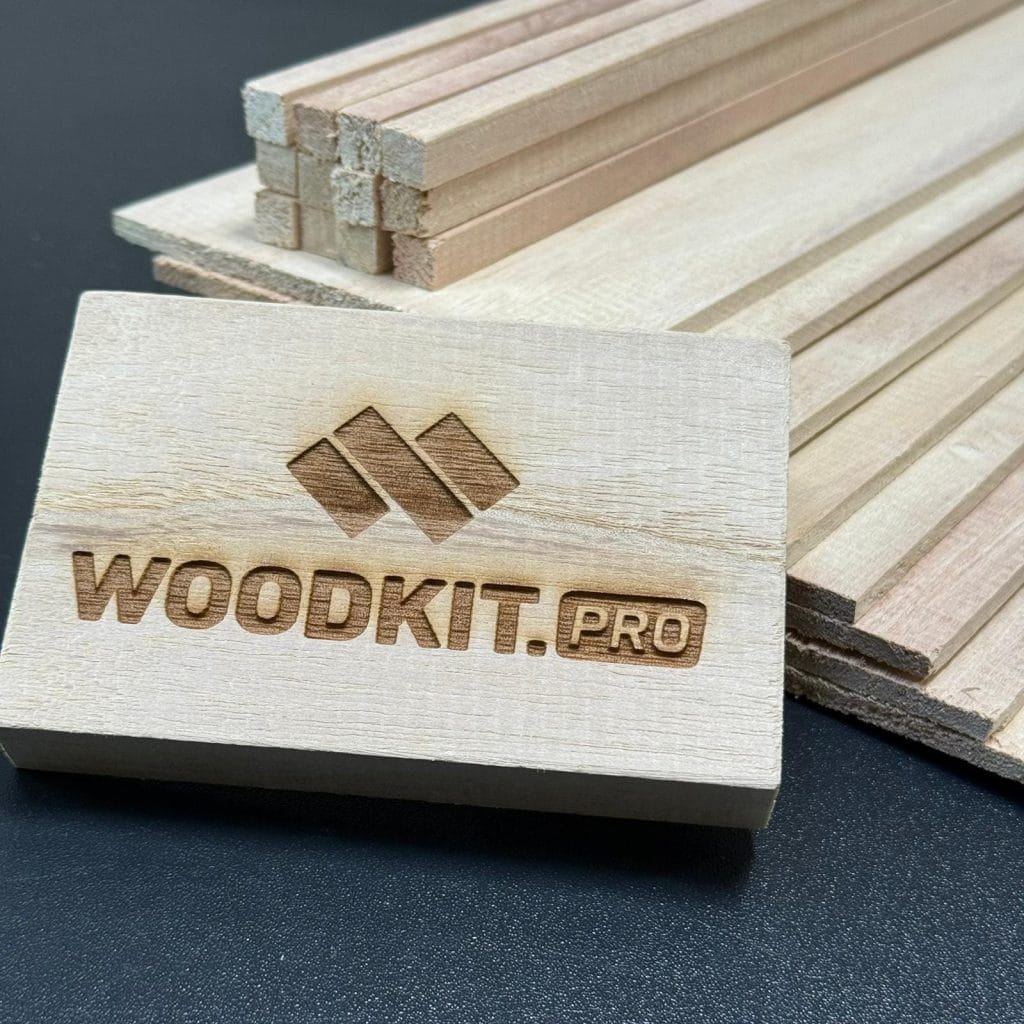
Paulownia vs balsa vs cedar
Balsa and western red cedar are the classic surfboard woods. Paulownia sits between them: heavier than balsa, lighter than cedar, and with the most even movement of the three when it dries.
| Wood | Specific gravity (approx.) | Tangential shrinkage | Radial shrinkage | T/R ratio |
|---|---|---|---|---|
| Balsa | 0.16 | 7.6% | 3.0% | 2.5 |
| Paulownia (Cotevisa 2, Spain) | 0.26 | 5.0% | 3.4% | 1.5 |
| Western red cedar | 0.31–0.34 | 5.0% | 2.4% | 2.1 |
Shrinkage from green to oven-dry. T/R ratio = tangential ÷ radial shrinkage; the closer to 1, the less a board tends to cup or twist as moisture changes. Paulownia: CETEBAL (2012) lab tests; specific gravity from basic density of mature wood in Fos et al. (2023). Balsa and western red cedar shrinkage: U.S. Forest Products Laboratory; specific gravity: Workshop Companion (balsa) and Virginia Tech wood technology data (cedar). Values come from different studies and are for comparison only.
Why not just balsa?
Balsa is lighter, but it is a tropical import with very variable density, and it moves more as it dries. It is usually glassed over a shaped blank, not used as thin skins over a frame.
Why not just cedar?
Cedar is beautiful and durable, but noticeably heavier. On a hollow board every extra gram in the skins and rails ends up in your arms on the paddle out.
Where it falls short, and how the build handles it
Paulownia is not a miracle wood. Lab testing is clear about three weak points, and a good build is designed around them.
- It is soft. Radial hardness was classed “very soft” (CETEBAL, 2012). Bare, it dents easily. In a board, the fiberglass and resin laminate gives the surface its impact resistance.
- It is not durable unprotected. Tests to European standards found it not durable against blue-stain fungi and sensitive to termites (CETEBAL/AIDIMA, 2012). It is not an outdoor wood to leave raw. Sealed inside a laminate it stays dry; any ding that exposes the wood should be repaired before the next session.
- Nails don’t hold well. Because it is so light, nails can pull out. Screws and glue are the way to fix things to it, which is how a board is built anyway.
Not all Paulownia is equal
“Paulownia” covers several species and hybrids, grown in very different ways. For a surfboard, three things decide whether a board of it will stay true.
1. Mature wood, not juvenile wood
A peer-reviewed study of Paulownia hybrid Cotevisa 2 grown in Valencia, Spain, followed the wood ring by ring. In the first four years of growth the wood was “very nervous”; from the fifth year it became “calm wood”. Tangential shrinkage dropped from 5.9% in the first ring to 4.4–4.5% in the fifth and sixth, and the tangential/radial ratio fell from 2.7 to 1.6 (Fos, Oliver-Villanueva & Vázquez, 2023). Wood from the outer, older part of the trunk is simply more stable.
2. Known origin and clone
A named, documented clone grown in managed plantations gives consistent wood from one batch to the next. Ask your supplier which species or clone it is and where it was grown.
3. Properly dried and selected
Wet or badly dried Paulownia raises a fuzzy surface when planed and keeps moving after you glue it up. Skins should come dry, planed to even thickness, straight-grained and free of knots and cracks.
What to ask before you buy: species or clone, country of growth, moisture content, whether skins are planed to a set thickness, and whether pieces are selected for their job (skins, rails, frame) or sold as mixed boards.
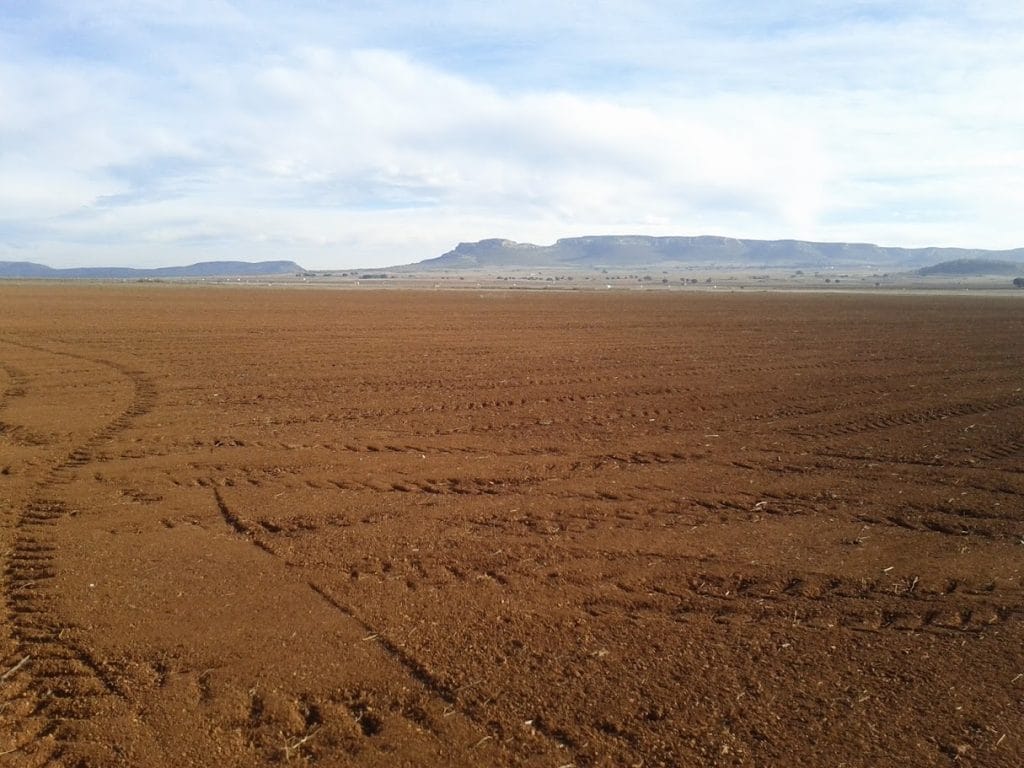
A real cut list for a hollow board
Orders of Paulownia from surfboard builders across Spain repeat the same pattern, and it is a good picture of what a hollow wooden board is made of.
| Part | Typical size | Finish | What it does |
|---|---|---|---|
| Skins (deck and bottom) | 4–5 mm × 120 mm × 2,000–3,000 mm | Rough or planed | Edge-glued into the top and bottom surfaces |
| Rail strips | 10 × 100 × 2,500–3,000 mm, ripped into 10 × 10 mm strips | Planed | Built up and shaped into the rails |
| Blocks | 15 × 120 × 1,000 mm | Planed | Nose, tail, fin box and plug blocks |
| Sawdust | A bag | — | Mixed with resin as a matching filler |
Based on real builder orders in Spain (2022). Lengths depend on the board; a longboard needs the long skins and rails. The internal frame (stringer and ribs) is cut separately to the board’s plan.
If you’d rather not source, select and cut all of this yourself, that is what a kit is for: Signature kits come with the frame already cut and the Paulownia prepared for each part, and Single gives you just the wood.
Working it: planing, sanding, drilling, fixing
Machining tests on Paulownia Cotevisa 2 (CETEBAL, 2012) line up with what builders see in the shop:
- Planing and routing: no difficulty, but use very sharp cutters. Dry wood gives a clean surface; damp wood raises fuzz.
- Sanding: start with a medium grit (80–100) without pressing hard, because the surface marks easily; finish with 120–220 before glassing.
- Drilling: no difficulty from 1.5 to 10 mm; a sharp bit avoids tearing the fibres.
- Screws and nails: screws go in without pre-drilling; nails do not grip well.
For the full build sequence, see how a WOODKIT board is built.
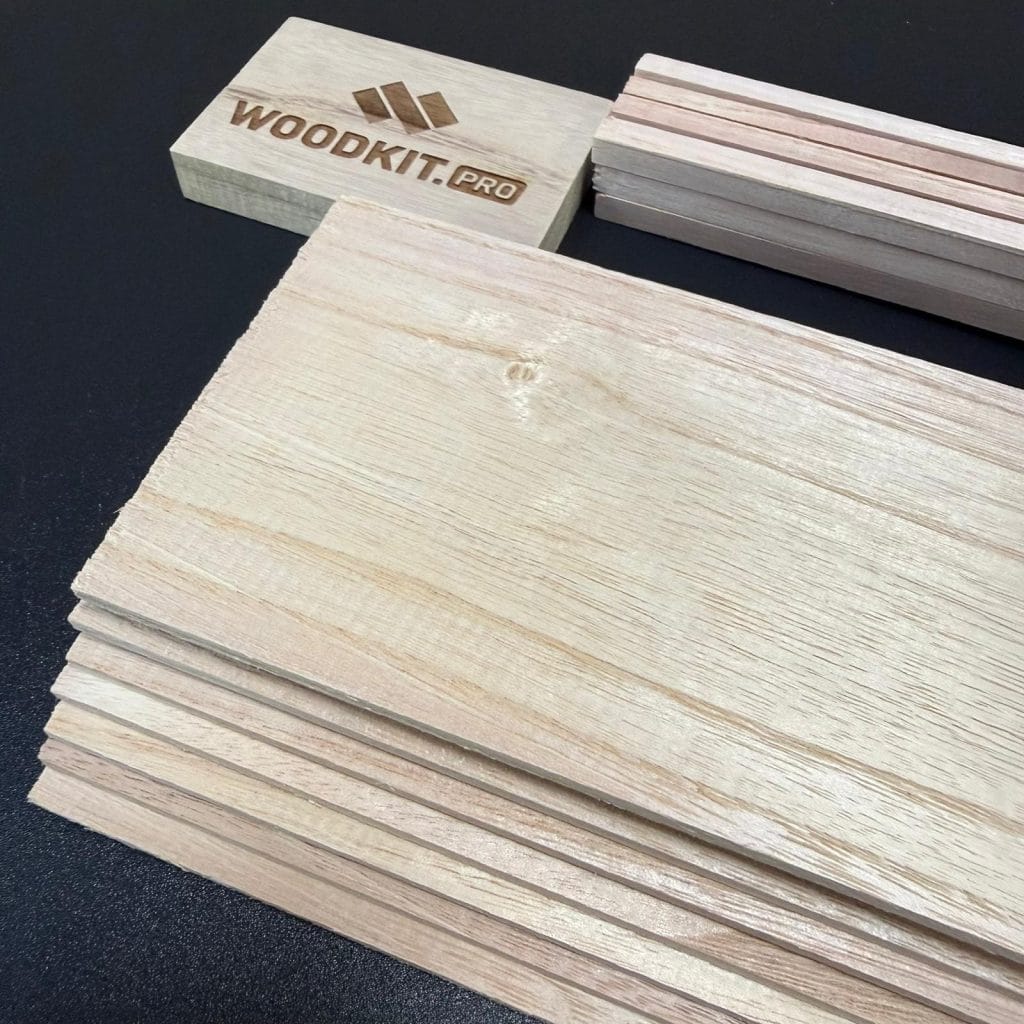
Where it comes from
The Paulownia we work with is grown in managed European plantations, and much of the published research on it in Spain is on the hybrid Cotevisa 2 (Paulownia elongata × Paulownia fortunei), the clone behind most of the data in this guide. Paulownia began to be introduced as a plantation timber about twenty years ago; we have worked with it for fifteen of them, from the nursery to the board.
A common worry about Paulownia is invasiveness: one species, Paulownia tomentosa, is considered invasive in some regions. The hybrid Cotevisa 2 behaves differently. In 2013 the forestry service of the regional government of Valencia certified that in its experimental plantations of Cotevisa 2 no regeneration from seed had been observed, no invasive behaviour had been detected, and that these are sterile clones whose seed is not viable (Generalitat Valenciana, 2013).
More on the tree and the plantations: Paulownia at WOODKIT.
FAQ
Is Paulownia good for surfboards?
Yes, for hollow wooden boards. It is very light (about 256 kg/m³ at 12% moisture in lab tests), stable once dry, glues well and holds screws. It must be fully sealed in resin and glass, because on its own it is soft and not durable.
Is a Paulownia surfboard heavier than a foam board?
A hollow wooden board is usually somewhat heavier than a standard foam board of the same size, and much lighter than a solid wood board. Final weight depends on the size, the wood selection and above all the glassing schedule. It still floats practically the same: volume is what floats, and every extra kilo is offset by one litre. We explain it in depth here.
Is Paulownia better than balsa for a surfboard?
They do different jobs. Balsa is lighter and is usually glassed over as a shaped core. Paulownia is a little heavier but moves more evenly when it dries, which suits thin skins and rails over a frame.
Does Paulownia rot?
Unprotected, it is not durable: lab tests found it not durable against blue-stain fungi and sensitive to termites. In a surfboard it is sealed inside the laminate. Repair any ding that exposes the wood, and keep the vent plug closed in the water.
What thickness of Paulownia do I need for surfboard skins?
Builders typically use skins of 4–5 mm, about 120 mm wide, in lengths from 2 to 3 m depending on the board.
Is Paulownia invasive?
One species, Paulownia tomentosa, is considered invasive in some regions. The hybrid Cotevisa 2 was certified by the Valencia regional forestry service as a sterile clone with non-viable seed and no invasive behaviour observed.
Related
Is surfing sustainable? The green paradox of the surfboard
Foam, resin, surf travel and what really changes with a hollow wooden board.
Read the article →Build it with the wood already solved
Pick a shape and get the frame cut and the Paulownia prepared for each part, or order just the wood if you have your own plan.
Sources
- CETEBAL – Centre Tecnològic Balear de la Fusta (2012). Características físico-mecánicas de la madera de Paulownia Cote-2, report P458. Tests to UNE 56531–56543.
- CETEBAL / AIDIMA (2012). Durabilidad de la madera de Paulownia híbrido Cote-2, report P554. Tests to UNE-EN 152 and UNE-EN 118.
- CETEBAL (2012). Pruebas de mecanizado y evaluación cualitativa de la madera de Paulownia Cote-2, report P555.
- Fos M., Oliver-Villanueva J.-V., Vázquez M. (2023). Radial variation in anatomical wood characteristics and physical properties of Paulownia elongata × Paulownia fortunei hybrid Cotevisa 2 from fast-growing plantations. European Journal of Wood and Wood Products 81: 819–831. doi:10.1007/s00107-023-01941-8 (open access).
- Generalitat Valenciana, Conselleria de Infraestructuras, Territorio y Medio Ambiente, Servicio de Ordenación y Gestión Forestal (2013). Certificate on the sterility of clone Cotevisa 2, PROFORBIOMED project.
- U.S. Forest Products Laboratory. Shrinkage values for domestic and imported woods, via woodbin.com.
- Workshop Companion. World woods mechanical properties chart (balsa).
- Virginia Tech, Department of Sustainable Biomaterials. Western redcedar (Thuja plicata) wood technology sheet.