Journal · Build local
Build local: a different economy for surfboards
What if the board didn’t travel the world finished? The design travels as a file, the material travels once, and the board is built close to the wave, by the surfer or a local workshop. Here is the idea, where it comes from, and where it falls short.
Short answer: a decentralized model for surfboards means sending the design and the prepared material, not the finished board, and building it where it will be surfed. It borrows from the Fab City movement’s idea of moving from “Products In, Trash Out” to “Data In, Data Out”. The benefits are a product people understand, value and can repair, and work and knowledge that stay in the local surf community. The cost is time: someone has to build the board.
From “products in, trash out” to “data in, data out”
In 2014, Barcelona launched Fab City, a challenge for cities to become largely self-sufficient in what they make by 2054. Its central idea is simple. Today, cities import finished products and export waste: “Products In, Trash Out”. The goal is to import and export mostly information, designs, files and know-how, and make things locally: “Data In, Data Out”.
The tools already exist. The Fab Foundation counts more than 2,300 fab labs in over 120 countries: local workshops with digital fabrication tools like CNC machines and laser cutters. Europe’s Distributed Design Platform, funded by the EU’s Creative Europe programme, connects designers who share their processes so others can reproduce them.
A surfboard is a good test for this idea. It is bulky, it is used in specific places, and those places often have makers who can build.
What travels and what doesn’t
In the factory model, a finished board travels: from the factory to a distributor, to a shop, to a car. In a decentralized model, what travels is different:
- The design travels as a file.
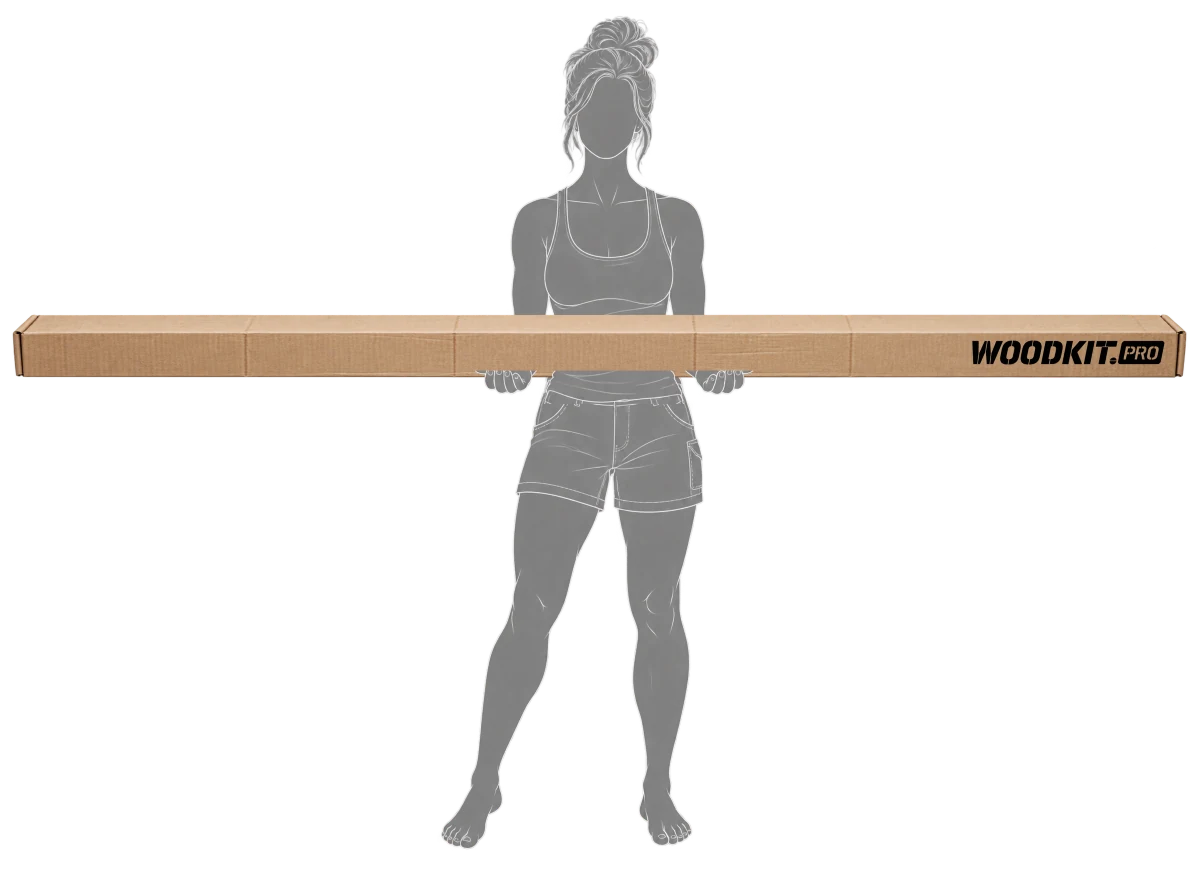
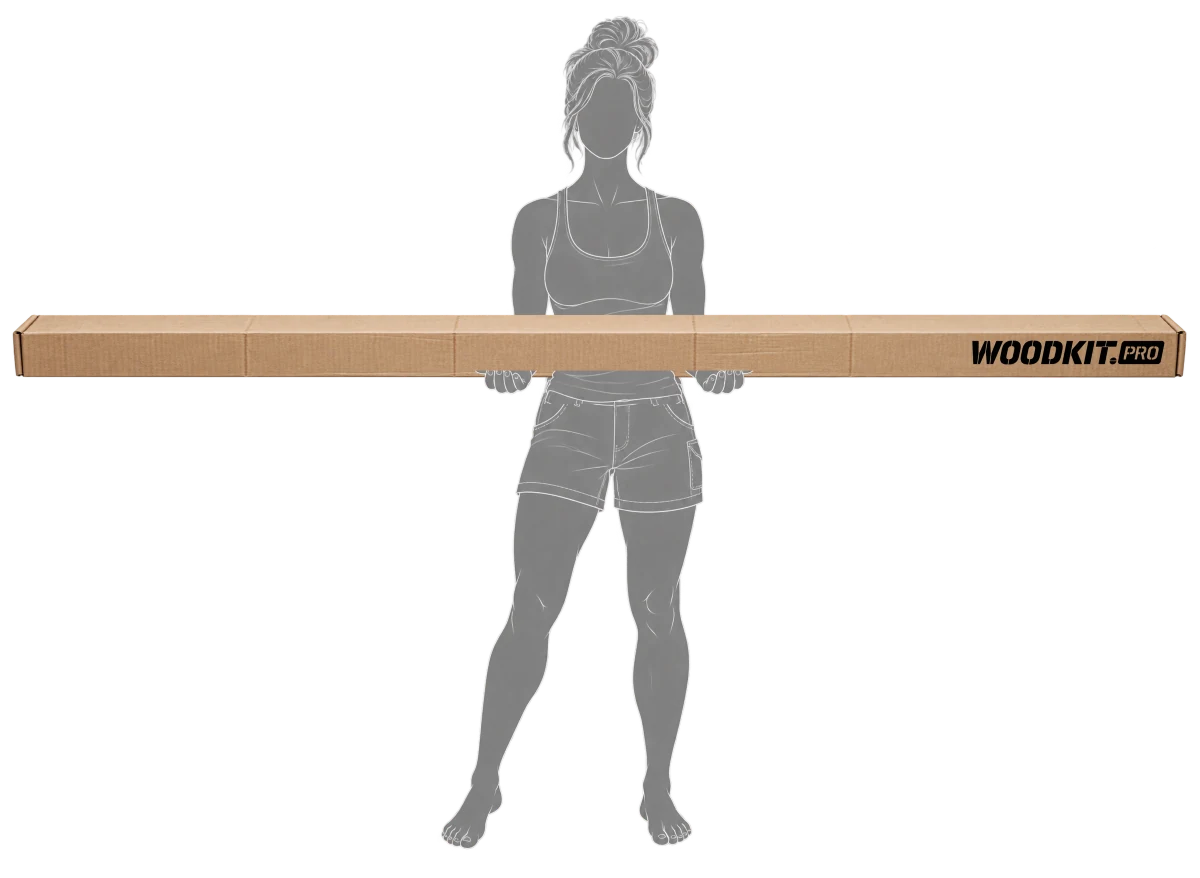
- The precise parts, the frame cut by CNC and the wood prepared for each piece, travel once, flat in a box.
- The build happens where the board will be surfed.
Flat-packing is how IKEA built a global business: far more product fits in each truck and container than if it were assembled. We haven’t measured the transport footprint of our own kits, so we won’t give you a number. But a box of flat parts is a very different object to ship than a finished, hollow, fragile board.
Why we value what we build
In 2012, researchers Michael Norton, Daniel Mochon and Dan Ariely published a study on what they called the IKEA effect. People who assembled a simple storage box were willing to pay 63% more for it than people who received the same box already built. They also valued their own amateur origami almost as highly as origami made by experts.
There was one condition: the effect disappeared when people didn’t finish, or when their work was undone. Building leads to love only when it ends in something complete.
That is why a kit alone is not enough. The build has to be designed to be finished, with precise parts and clear steps, and with someone to help when needed. That is the role of local workshops.
Repair as a principle
Europe is moving toward products that last and can be repaired. The EU Right to Repair Directive, approved in 2024, gives consumers a right to have certain defective products repaired more easily and cheaply, and countries had to adopt it by July 2026. The Ecodesign for Sustainable Products Regulation, in force since 2024, sets rules on durability and repairability and introduces a digital product passport.
Surfboards are not covered by these rules. But the direction is clear, and a board you built yourself is a board you know how to fix. You know what is under the glass, how the frame runs and what the wood is. Repair stops being a mystery.
What stays in the community
When a board is built locally, part of its value stays local: the workshop that hosts the build, the instructor who teaches it, the glassing shop, the café next door. Studies commissioned by independent-business groups in the US suggest that money spent at local independent businesses recirculates in the local economy more than money spent at chains. Those studies are not peer-reviewed and come from another context, so we use them as a sign of direction, not as proof.
The same goes for knowledge. When people learn to build, a surf town gains builders, not just buyers. Tourism researchers call this creative tourism: travel built around learning a skill that belongs to the place. A week spent building your own board is exactly that.
This is how WOODKIT works. We design the board, cut the frame and prepare the Paulownia. The build happens at home, or in a workshop led by a local instructor. See how a WOODKIT hub works.
The limits, honestly
- It takes time. Building a hollow wooden board takes several days of work, plus curing time. Not an afternoon.
- It is not for everyone. Some surfers want a board, not a project. That is fine.
- The materials still travel. The wood, the resin and the glass come from somewhere. Decentralized does not mean zero-impact.
- It still uses resin. A hollow wooden board is sealed in epoxy and fibreglass.
What changes is the relationship: who makes the board, what they know about it and how long they keep it. For the environmental side, read Is surfing sustainable?. For how the industry works today, read How surfboards are made today.
FAQ
What is distributed manufacturing?
A way of making products where designs and data travel globally but production happens locally, close to the people who use the product, often in small workshops with digital fabrication tools.
What does “Data In, Data Out” mean?
It is the Fab City movement’s goal: instead of importing finished products and exporting waste (“Products In, Trash Out”), cities import and export mostly designs and knowledge, and make things locally.
What is the IKEA effect?
A finding by Norton, Mochon and Ariely (2012): people value things they have built themselves more than identical things built by others, as long as they complete them.
Can I build a surfboard without a workshop?
Yes, with a kit that includes precise, pre-cut parts, clear instructions and a few basic tools. A workshop with an instructor makes it easier to finish, especially the first time.
Is a locally built board more sustainable?
It can be, mainly because it is built to be understood, repaired and kept. The materials still travel and it is still sealed in resin, so it is not impact-free.
Keep reading
Guide
Paulownia wood for surfboards: the builder’s guide
Density, stability and durability with lab data, and a real cut list for a hollow board.
Read →The tree
What is Paulownia? The tree, the wood and what’s true about it
Botany, uses from Japan to surfboards, main properties, and the myths that don’t hold up.
Read →Sustainability
Is surfing sustainable? The green paradox of the surfboard
Foam, resin and surf travel: what the data say, and what really changes with a wooden board.
Read →Surf industry
How surfboards are made today: the industry behind the board
Factories in Asia, supermarket foam boards, CNC shaping and famous logos that no longer make anything.
Read →The design travels. The board is yours.
Pick a shape. We send the CNC-cut frame and the prepared Paulownia, flat in a box. Build it at home or in a local workshop.
Sources
- Fab City Global Initiative. Fab City whitepaper. And European Circular Economy Stakeholder Platform, Fab City Global Initiative.
- Fab Foundation. fabfoundation.org (fab lab network).
- Distributed Design Platform. About.
- IKEA Museum. The story of flat packs.
- Norton M. I., Mochon D., Ariely D. (2012). The IKEA effect: when labor leads to love. Journal of Consumer Psychology 22(3). Author PDF.
- Council of the European Union (30 May 2024). Council gives final approval to right-to-repair directive.
- Osborne Clarke (2024). What is the EU Digital Product Passport (ESPR).
- Civic Economics / American Booksellers Association. Indie Impact study series.
- OECD (2014). Tourism and the Creative Economy.